

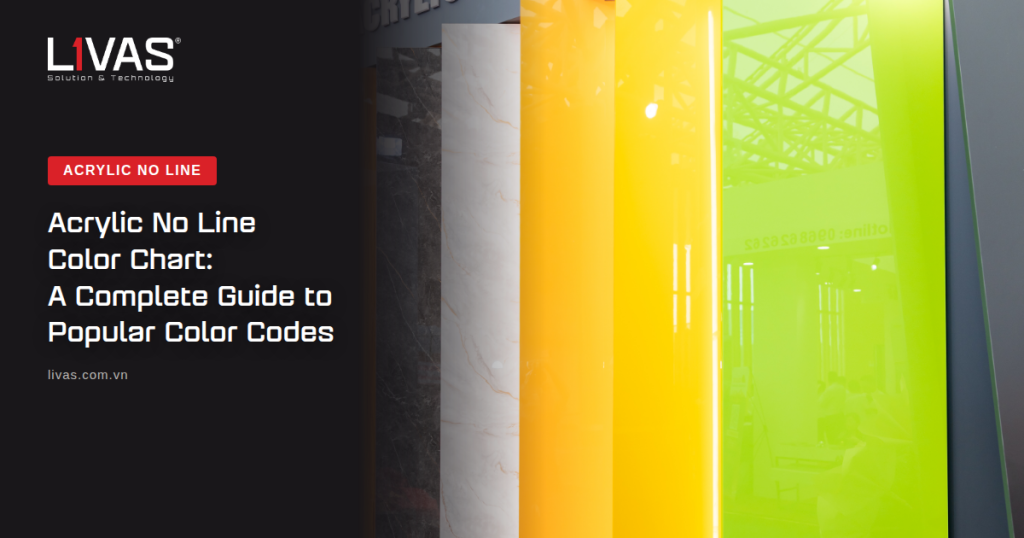
Acrylic No Line Color Chart: A Complete Guide to Popular Color Codes
When choosing Acrylic No Line doors for a kitchen or wardrobe, the color chart is what really shapes the look and feel of the whole room. Unlike solid paint or Laminate, which are limited to a few dozen standard tones, Acrylic No Line comes in a much richer palette, ranging from easy-to-match neutrals to bold statement colors, covering everything from modern minimalism to classic elegance. LIVAS currently offers Acrylic No Line in two lines to suit different needs: the standard line (color code LV) and the scratch-resistant line (color code LVH).
What Color Groups Are in the Acrylic No Line Color Chart?
Manufacturers typically organize the Acrylic No Line color chart (or “color map”) into three main groups, making it easier for customers to browse and choose by color code:

The solid gloss group includes white, cream, gray, and black tones — this is the best-selling group because it suits most design styles, especially the minimalist look that’s currently in high demand. The metallic and pearl group adds a subtle shimmer under light and is often chosen for living rooms or kitchen cabinets that need an upscale accent. The wood-grain and stone-grain group mimics natural materials while keeping Acrylic’s signature glossy finish, suiting anyone who loves the warmth of wood but still wants an easy-to-clean surface.
Every color code on the chart has its own designation to ensure consistency across orders — customers can request the same color code for multiple production runs and get a matching result every time.
How to Read and Choose a Color Code From the Acrylic Color Chart
When browsing an Acrylic glass-look door color chart, there are a few things to keep in mind to avoid a mismatch between the sample and the finished installation. First, a color chart printed on paper or displayed on a screen will always have some deviation from the actual color of the Acrylic sheet, due to how a glossy surface reflects light. Whenever possible, customers should request a physical sample before confirming a large order.
Second, the same color code can look different under different light sources (warm light, cool white light, natural daylight) — it’s worth testing a sample at the actual installation site before deciding. Finally, for projects that need consistent color across multiple items (kitchen cabinets, wardrobes, wall panels), it’s best to confirm one single color code and one production batch to avoid noticeable tone differences.
LIVAS’s Acrylic Door Color Chart
In LIVAS’s Acrylic No Line color chart, color codes are clearly organized by group (solid gloss, metallic, wood grain) with real photos taken under standard lighting, helping customers picture how a color will look on the finished product. Beyond the codes already on the chart, some manufacturers also accept custom color orders for projects with a large enough order quantity, though production time and cost for custom colors are typically higher than for colors already on the chart.

Tips for Choosing Acrylic Door Colors for Different Spaces
Choosing a color isn’t just about personal taste — it also needs to account for the size and lighting of the space where it will be installed. For a small kitchen or one with limited natural light, lighter tones on the chart such as white, cream, or light gray help the space feel more open and airy. On the other hand, for a large, well-lit kitchen, homeowners can be bolder with darker tones like black, moss green, or deep brown to create a striking, characterful accent.

It’s also worth considering how the cabinet color pairs with other materials in the space, such as the countertop, flooring, and wall finishes, so that the overall look feels cohesive rather than looking at the color chart in isolation.
Whether you’re a homeowner looking for finishing materials for your kitchen or wardrobe, or an architect, contractor, or workshop owner who needs a steady supply of Acrylic No Line doors for multiple projects at once, LIVAS can meet your needs. With production facilities across multiple regions, LIVAS supports fast delivery and provides material samples (Swatch Box) so you can check color and quality in person before deciding, and is currently partnering with thousands of workshops and contractors nationwide.
FAQ — Frequently Asked Questions About the Acrylic No Line Color Chart
How many color codes are on the Acrylic No Line color chart?
The number of color codes varies by manufacturer, typically ranging from a few dozen to over a hundred, organized into solid gloss, metallic, and wood-grain groups.
Can I order a custom Acrylic color?
Yes, many manufacturers accept custom color orders beyond the standard chart, but this usually requires a large enough order quantity and a longer production time than choosing an existing color.
Is an online color chart accurate to the real color?
An online color chart is for reference only, since screen display always introduces some deviation; it’s best to request a physical sample to confirm the exact color before placing a large order.
Which white color code is the most popular on the Acrylic color chart?
Solid gloss white and pearl white are the most popular tones, since they pair easily with almost any interior style and help a kitchen look brighter and cleaner.