

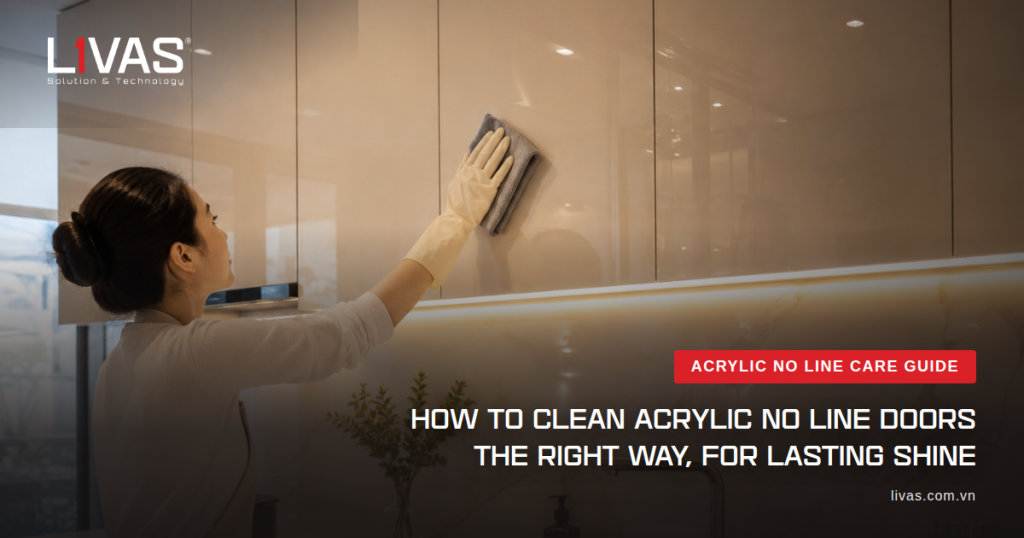
How to Properly Clean Acrylic No Line Cabinet Doors and Keep Their Shine Lasting
Acrylic No Line cabinet doors are known for their upscale mirror-gloss surface, but that same high shine also makes this material show stains and fingerprints more readily than matte-surfaced materials. Cleaning it the right way not only keeps the cabinets looking bright and beautiful, it also extends the life of the Acrylic coating, preventing scratches and discoloration over time. LIVAS currently offers Acrylic No Line in two lines to suit different needs: the standard line (color code LV) and the scratch-resistant line (color code LVH).

Why Does Acrylic Need to Be Cleaned the Right Way?
While the Acrylic surface has better moisture resistance and light scratch resistance than solid paint or Melamine, it’s quite sensitive to harsh cleaning chemicals and rough cleaning materials. Cleaned the wrong way, the mirror-gloss surface can gradually dull, develop fine micro-scratches, or turn yellowish in high-contact spots such as cabinet handles or countertops near the cooking area.
Steps for Cleaning Acrylic No Line Cabinet Doors
Start by using a soft, dry cloth or a microfiber cloth to wipe away surface dust before wet-cleaning, so loose grit doesn’t scratch the surface as you wipe. Next, dilute a small amount of dish soap or a neutral cleaning solution in warm water, dip a soft cloth into it, wring out the excess, and wipe gently in one direction rather than scrubbing hard in circles.
For stubborn stains like grease or old marks, you can mix a small amount of baking soda with water into a paste, dab it gently onto the stain, then wipe again with a clean, damp cloth. Finally, dry the entire surface with a soft, dry cloth to prevent standing water, keeping the doors dry and preserving their natural shine.
What to Avoid When Cleaning Acrylic
Never use strongly acidic or alkaline cleaning chemicals, industrial alcohol, or petroleum-based solvents, as these can fade the color, cause yellowing, or peel the Acrylic coating. Don’t use metal scouring pads, abrasive scrubbers, or dry rough paper towels, since they can leave fine scratches on the mirror-gloss surface and dull its sharp reflection.
It’s also best to avoid letting water sit for long periods on the surface or in the seams between doors, especially near a sink, since prolonged moisture can affect the engineered wood core underneath, even though the Acrylic surface itself is moisture-resistant.

How Often Should You Clean It?
For kitchen cabinets, a light daily wipe-down after cooking helps remove grease and condensation, along with a more thorough weekly clean using a neutral cleaning solution. For wardrobes or areas with less grease exposure, cleaning once a week with a damp cloth is usually enough to keep the surface looking bright.
Whether you’re a homeowner looking for finishing materials for your kitchen or wardrobe, or an architect, contractor, or workshop owner who needs a steady supply of Acrylic No Line doors for multiple projects at once, LIVAS can meet your needs. With production facilities across multiple regions, LIVAS supports fast delivery and provides material samples (Swatch Box) so you can check color and quality in person before deciding, and is currently partnering with thousands of workshops and contractors nationwide.
FAQ — Frequently Asked Questions About Cleaning Acrylic No Line
Can I use glass cleaner on Acrylic doors?
It’s best to avoid glass cleaners containing alcohol or ammonia, as they can dull and discolor the Acrylic coating over time; a diluted neutral cleaning solution is the safer choice.

Can small scratches on Acrylic doors be fixed?
For very light scratches, a polishing compound made for Acrylic surfaces can help minimize their appearance; for deeper scratches, it’s best to contact your installer for advice on repair or replacement.
How often should Acrylic doors get a thorough clean?
A thorough clean with a neutral cleaning solution about once a week, combined with light daily wiping in the kitchen area, helps keep grease and dust from building up.