

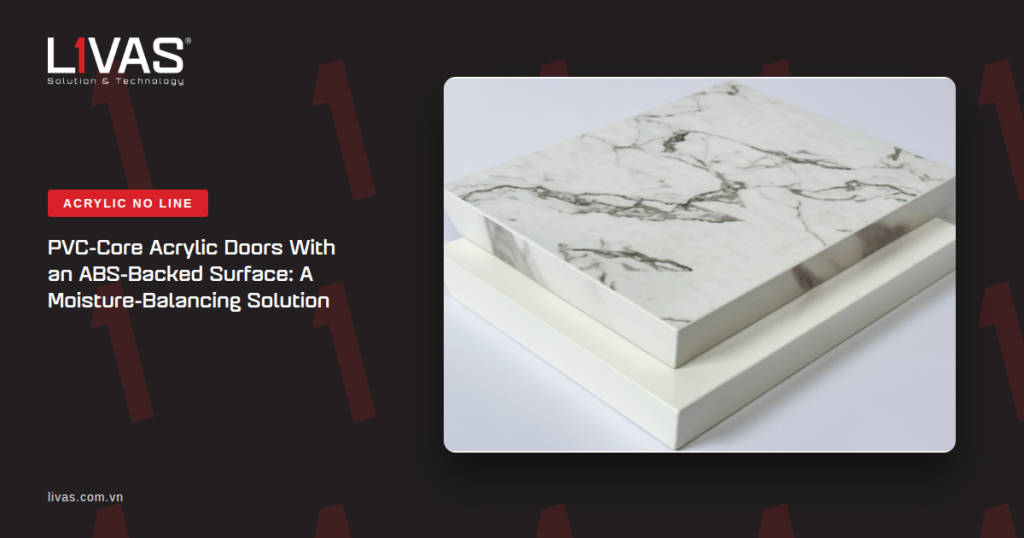
PVC-Core Acrylic Doors With an ABS-Backed Surface: A Moisture-Balancing Solution
Beyond MDF and solid plastic cores, PVC-core Acrylic doors with an ABS-coated back are also a common construction on the market, especially in product lines that prioritize a balance of durability, weight, and moisture resistance. LIVAS currently offers Acrylic No Line in two lines to suit different needs: the standard line (color code LV) and the scratch-resistant line (color code LVH).

What Is a PVC-Core Acrylic Door With an ABS Back?
This is a cabinet door that uses a PVC sheet as the main core, with the front coated in Acrylic for shine and color, while the back is coated with an additional layer of ABS plastic instead of being left bare or given a standard paint finish. The ABS layer on the back helps balance the expansion and contraction of both sides of the door under changes in temperature and humidity.
Why Is an ABS Layer Needed on the Back?
When one side of a door is coated in Acrylic (which has different physical properties from the PVC core underneath) while the other side is left bare, the mismatch in moisture absorption and thermal expansion between the two faces can cause the door to warp slightly over time, especially in a hot, humid climate. The ABS layer on the back helps balance out this property, keeping the door flatter and more stable over long-term use.
Advantages of a PVC-Core, ABS-Backed Construction
Compared with an engineered wood core, a PVC core has good moisture resistance, is immune to termites, and is relatively lightweight, which makes it easier to transport and install. Combined with the ABS layer on the back, this construction gives the door good technical stability and limits warping — one of the most common flaws in doors with an unbalanced construction between the two sides.
How Does It Compare With Other Acrylic Door Constructions?
Compared with a moisture-resistant MDF-core Acrylic door, a PVC-core door with an ABS back has an advantage in near-total water resistance and lighter weight, but MDF cores remain popular for their good rigidity and more accessible cost for most projects. The right construction to choose should be based on the specific installation location, budget, and desired durability of each project.

Whether you’re a homeowner looking for finishing materials for your kitchen or wardrobe, or an architect, contractor, or workshop owner who needs a steady supply of Acrylic No Line doors for multiple projects at once, LIVAS can meet your needs. With production facilities across multiple regions, LIVAS supports fast delivery and provides material samples (Swatch Box) so you can check color and quality in person before deciding, and is currently partnering with thousands of workshops and contractors nationwide.
FAQ – Frequently Asked Questions About PVC-Core Acrylic Doors
Is a PVC-core Acrylic door as durable as an MDF-core one?
Both are durable when manufactured correctly; a PVC core has an edge in near-total moisture resistance, while an MDF core has an edge in rigidity and a more accessible cost.
Why isn’t Acrylic applied to both sides of the door?
Coating both sides in Acrylic would significantly raise manufacturing costs, while the back of the door usually isn’t visible anyway; the ABS layer is an effective, more affordable way to balance moisture.
Is a PVC-core Acrylic door suitable for every type of cabinet?

It suits most residential kitchen and wardrobe cabinets; for specialized projects, it’s best to consult the manufacturer’s technical team to choose the most suitable construction.