

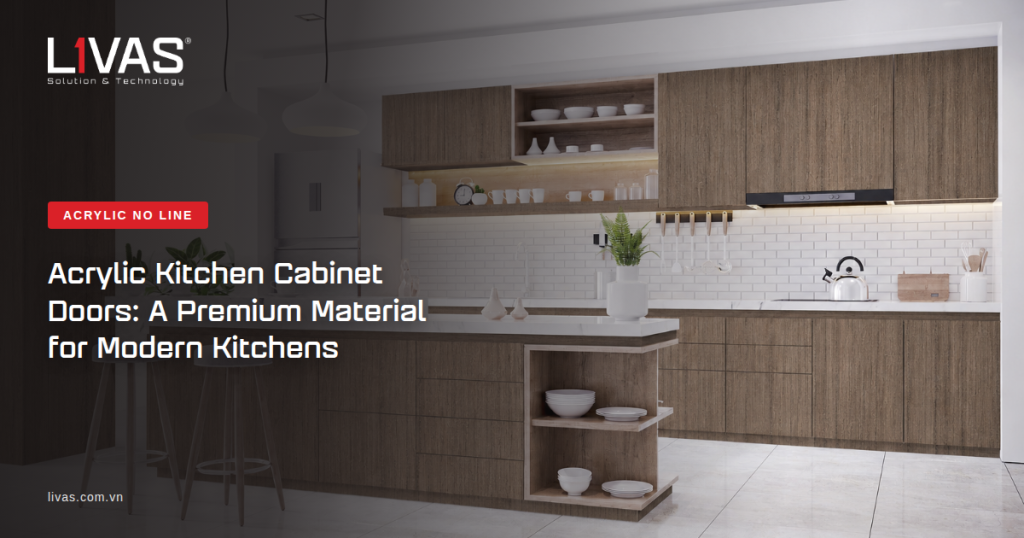
Acrylic Kitchen Cabinet Doors: A Premium Material for Modern Kitchens
Among all the applications of Acrylic No Line, kitchen cabinet doors are the most common, since the kitchen is the area most exposed to grease, moisture, and daily heavy use. Acrylic kitchen doors meet both the aesthetic and durability requirements well, making them a top choice for many families and interior designers. LIVAS currently offers Acrylic No Line in two lines to suit different needs: the standard line (color code LV) and the scratch-resistant line (color code LVH).
Why Choose Acrylic Kitchen Cabinet Doors?
The kitchen is regularly exposed to steam, grease, and fluctuating temperatures while cooking, which demands a door material with good moisture resistance and easy cleaning. Acrylic kitchen doors meet this need thanks to their sealed surface, which limits water and grease from soaking into the wood core underneath, while the glossy finish also makes wiping away stains easier than on matte or textured surfaces.

Beyond function, Acrylic kitchen doors also score well aesthetically with a wide color range, from light tones that make a kitchen feel more spacious to bold tones that add an upscale accent, suiting many design styles from modern and minimalist to neoclassical.
Common Frame Types for Acrylic Kitchen Cabinets
The market offers several variations of Acrylic kitchen cabinets depending on the frame material. Stainless-steel-frame cabinets with Acrylic doors are the premium option, with strong moisture resistance and load-bearing strength, suiting a hot, humid climate. Plastic-carcass cabinets with Acrylic doors are lightweight and offer absolute moisture resistance for the cabinet body, often paired with Acrylic doors to optimize both durability and looks. Aluminum-frame or engineered-wood-frame cabinets with Acrylic doors are a popular, more accessible option that suits most residential projects.
Acrylic Kitchen Doors vs. Other Materials
Compared with traditional painted kitchen doors, Acrylic has a more even shine and shows fewer brush marks or yellowing over time. Compared with Laminate doors, Acrylic typically has the signature mirror-gloss finish that’s hard to find on Laminate, which leans toward matte or faux-wood-grain surfaces. In terms of price, Acrylic kitchen doors usually sit in the mid-to-premium range — higher than Melamine or Laminate but lower than natural wood doors or high-end PU paint finishes.
Tips for Choosing Acrylic Kitchen Doors for Your Home
When choosing Acrylic kitchen doors, homeowners should favor manufacturers that use No Line edge-banding technology to avoid edge peeling over time — a common flaw in cheaper products with an unreliable production process. It’s also worth choosing a cabinet frame (stainless steel, plastic, or moisture-resistant engineered wood) that suits your climate and budget, since the frame directly affects the overall durability of the kitchen cabinet.

For areas near the sink or stove, it’s best to favor a stainless-steel frame or a dedicated moisture-resistant carcass to prevent long-term dampness from affecting the cabinet structure, even though the Acrylic door surface itself already resists moisture well.
Whether you’re a homeowner looking for finishing materials for your kitchen or wardrobe, or an architect, contractor, or workshop owner who needs a steady supply of Acrylic No Line doors for multiple projects at once, LIVAS can meet your needs. With production facilities across multiple regions, LIVAS supports fast delivery and provides material samples (Swatch Box) so you can check color and quality in person before deciding, and is currently partnering with thousands of workshops and contractors nationwide.
FAQ — Frequently Asked Questions About Acrylic Kitchen Cabinet Doors
Do Acrylic kitchen doors handle heat well?
Acrylic kitchen doors can withstand the temperatures of normal household kitchen use, but it’s best to avoid placing them directly next to a high heat source, such as an unshielded gas stove, to protect the surface’s long-term durability.

Are Acrylic kitchen cabinets more expensive than Laminate ones?
Acrylic kitchen cabinets typically cost more than Laminate due to a more complex manufacturing and surface-finishing process, but in return they offer a more premium, glossier look.
Are Acrylic kitchen doors suitable for a small kitchen?
Very suitable, especially in light tones or mirror-gloss finishes, which help reflect light and make the kitchen feel more spacious than its actual size.
