

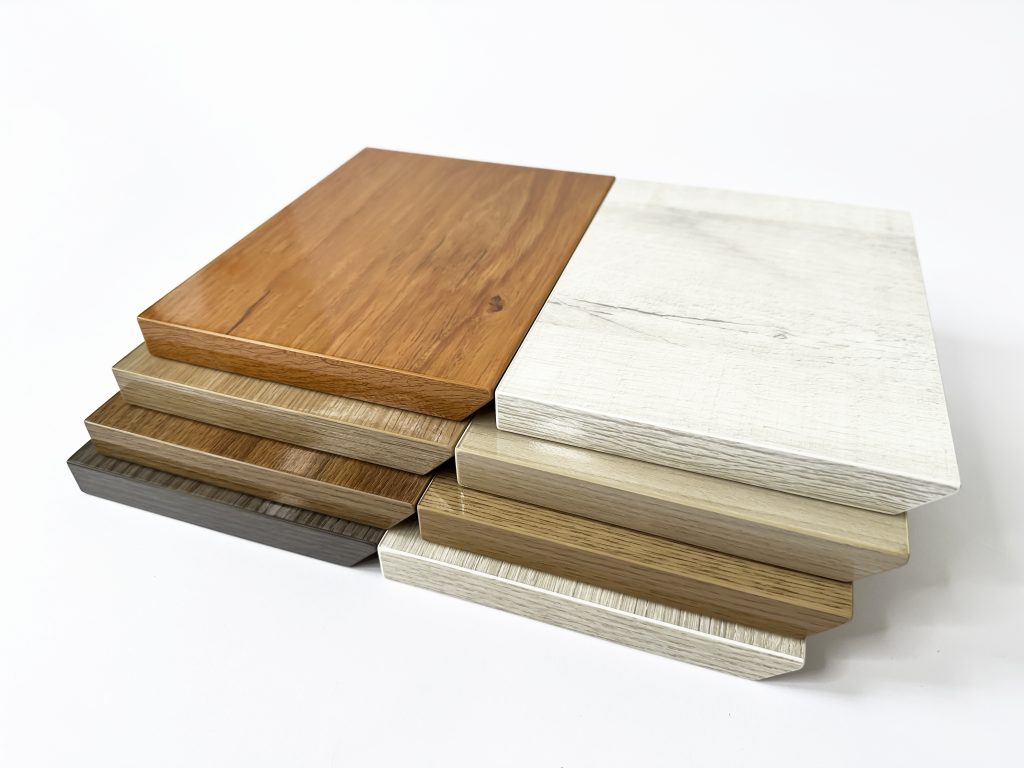
Anti-Scratch Acrylic Plywood: Overview and Structure
You are viewing the Acrylic plywood product line by Livas. In this article, we will provide full details for your reference, as well as the latest market price list updates.
What is Acrylic Plywood Material?
Before diving into this product line, let’s explore what Acrylic material actually is. Put simply, Acrylic is an industrial plastic synthesized from petroleum-based compounds, giving it exceptional durability.
Acrylic plastic features a glossy, smooth surface available in a wide variety of colors. Because of this, Acrylic plywood is increasingly becoming a popular choice in interior architecture, replacing traditional PU paints.
Now that we understand Acrylic plastic, answering “What is Acrylic plywood?” becomes straightforward. It is an engineered wood board coated with a layer of Acrylic plastic on top. Unlike standard materials like white Poly-coated boards or PU paint, Acrylic delivers a much deeper high-gloss finish—which is why it is also known as mirror-gloss wood.
Structure of Acrylic Plywood
Based on its definition, the structure of Acrylic-coated plywood consists of two main parts: the core board and the outer Acrylic plastic coating.
The core board can be made from industrial wood materials such as MDF or PVC foam boards. Therefore, it is important to research carefully and select the right substrate before choosing an Acrylic board that fits both your functional needs and your budget.
How is Acrylic Plywood Manufactured?
The production process for Acrylic-coated plywood is fairly similar to other coated wood materials:
-
Step 1: Clean both the wood core board and the back surface of the Acrylic sheet.
-
Step 2: Apply a layer of specialized adhesive onto the board’s surface.
-
Step 3: Feed the board into a cold press machine using a specific standard pressure for 4 to 5 hours to ensure a firm, durable bond.
A single press machine can process 50 to 100 Acrylic boards at a time, depending on the thickness. While the process is straightforward, it requires high precision and meticulous care during the bonding phase to ensure the Acrylic layer is uniform and free of defects.
Classification of Acrylic Plywood
Besides sorting by color, size, and thickness, these products are generally categorized into:
-
Crystal Acrylic Plywood: Coated with a layer of Acrylic that offers a brilliant, crystal-clear sheen. It is highly praised for its luxurious, eye-catching surface, making it ideal for focal points or well-lit spaces.
-
Mirror-Gloss Acrylic Plywood: Features a mirror-like high-shine finish. This is the traditional and most widely used type of Acrylic on the market, giving your space a fresh, bright, and modern feel.
-
Anti-Scratch Acrylic Plywood: An upgraded version designed to overcome the drawbacks of standard Acrylic by adding scratch resistance, keeping your furniture pristine without sacrificing aesthetic value.
Applications of Acrylic Plywood Today
Despite a few minor limitations, Acrylic plywood remains a top choice in modern architecture thanks to its outstanding advantages.
It is widely used to manufacture kitchen cabinets, counters, bar units, wardrobes, TV consoles, and various household furniture—especially in apartments and modern living spaces.