

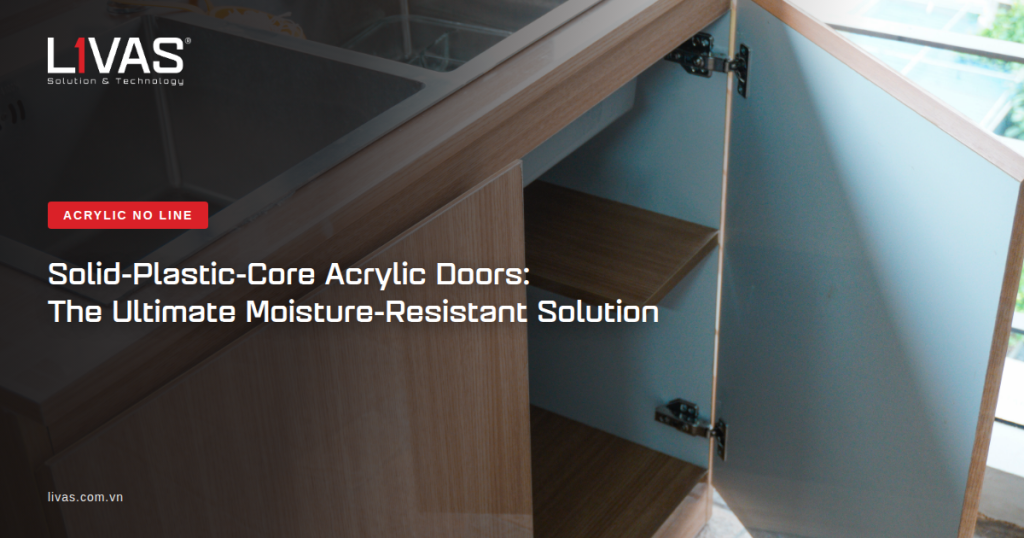
Solid-Plastic-Core Acrylic Doors: The Ultimate Moisture-Resistant Solution
Alongside MDF, a solid plastic core is an increasingly popular choice for Acrylic No Line doors, especially in projects that demand near-total moisture resistance. So what sets a plastic-core Acrylic door apart, and which spaces is it best suited for? LIVAS currently offers Acrylic No Line in two lines to suit different needs: the standard line (color code LV) and the scratch-resistant line (color code LVH).
What Is a Plastic-Core Acrylic Door?
A plastic-core Acrylic door (also called a plastic-core Acrylic panel or solid-plastic Acrylic door) uses a solid PVC sheet or similar material as the inner core instead of engineered wood, then follows the same general process — an outer Acrylic coating and No Line edge banding — used across this material family.

Advantages of a Plastic Core Over a Wood Core
The biggest advantage of a solid plastic core is its near-total water resistance — it won’t swell, decay, or deform even under prolonged direct contact with water, something that even moisture-treated engineered wood struggles to match at the same level. Because of this, plastic-core Acrylic doors are often the preferred choice for high-humidity areas or spots with frequent water exposure, such as lower kitchen cabinets or cabinets near a laundry area.

A plastic core also offers complete resistance to termites, making it well suited to projects in humid regions or harsh climate conditions.
Drawbacks to Consider
Despite its moisture-resistance advantage, a solid plastic core typically costs more to manufacture than a moisture-resistant MDF core, and its weight and rigidity also differ in ways that a contractor needs to carefully account for when designing the frame and hinge system. So the choice between a plastic core and an MDF core should be based on a specific assessment of budget and the real-world usage conditions of each project.
Best Uses for Plastic-Core Acrylic Doors
Plastic-core Acrylic doors are especially well suited to lower kitchen cabinets — an area regularly exposed to dishwashing water and moisture from a dishwasher or plumbing. This material is also used for outdoor kitchen cabinets, bar areas, pantries, or commercial projects that require higher durability under harsher-than-typical residential conditions.
Whether you’re a homeowner looking for finishing materials for your kitchen or wardrobe, or an architect, contractor, or workshop owner who needs a steady supply of Acrylic No Line doors for multiple projects at once, LIVAS can meet your needs. With production facilities across multiple regions, LIVAS supports fast delivery and provides material samples (Swatch Box) so you can check color and quality in person before deciding, and is currently partnering with thousands of workshops and contractors nationwide.

FAQ — Frequently Asked Questions About Plastic-Core Acrylic Doors
Is a plastic-core Acrylic door heavier than an MDF-core one?
The weight difference between the two varies depending on the specific type and thickness of plastic used, so it’s best to check detailed specifications from the manufacturer for an accurate comparison.
Is a plastic-core Acrylic door suitable for an outdoor kitchen?
Yes — thanks to its complete moisture and termite resistance, a plastic core is a better fit for outdoor or semi-outdoor areas than an engineered wood core.
Is a plastic-core Acrylic door more expensive than an MDF-core one?
A solid plastic core typically costs more to manufacture than a moisture-resistant MDF core; the exact difference depends on the supplier and the specifications of each product.