

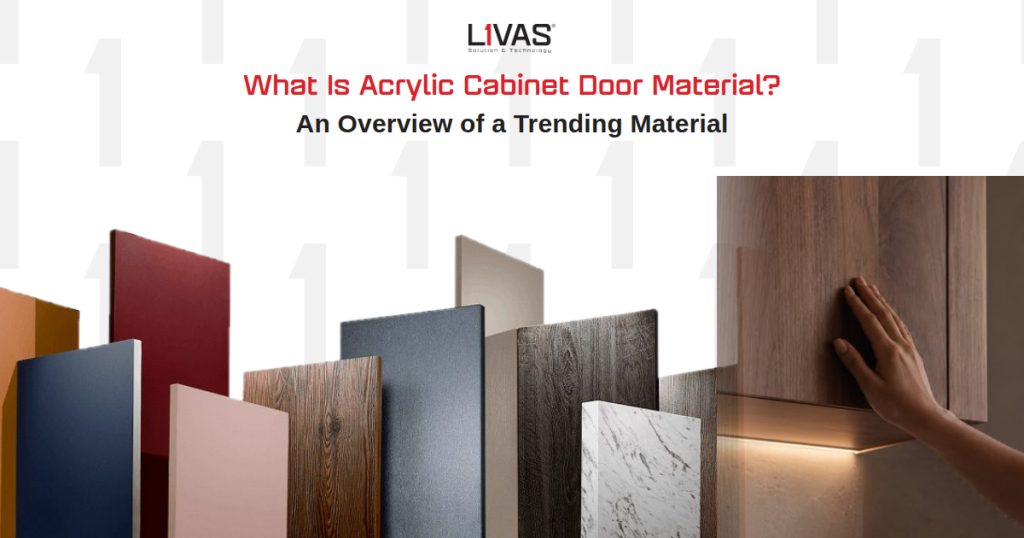
What Is Acrylic Cabinet Door Material? An Overview of a Trending Material
Acrylic cabinet doors are gradually replacing traditional door materials like solid paint, Laminate, and Melamine in many modern interior projects. With a beautiful glossy surface, a wide range of colors, and high durability, Acrylic doors are used widely across kitchen cabinets, wardrobes, and various stainless-steel-frame, plastic-frame, or wood-frame cabinet systems. LIVAS currently offers Acrylic No Line in two lines to suit different needs: the standard line (color code LV) and the scratch-resistant line (color code LVH).
What Is an Acrylic Cabinet Door?
An Acrylic cabinet door is built from an engineered wood core (MDF or HDF) coated with a layer of Acrylic resin (PMMA) on the outside, creating either a mirror-gloss or a matte-gloss surface depending on the type. Compared with traditionally painted doors, Acrylic doors have a more even shine, are less prone to yellowing over time, and give a more premium feel once installed.

The market today offers several Acrylic door variants that differ by frame: stainless-steel-frame cabinets with Acrylic doors, aluminum-frame cabinets with Acrylic doors, plastic doors coated with Acrylic, or wood doors coated with Acrylic — each suiting a different budget and technical requirement for the project at hand.
General Structure of an Acrylic Cabinet Door
Fundamentally, an Acrylic cabinet door panel consists of three main layers: the inner core (usually moisture-resistant MDF), the outer Acrylic coating that provides the shine and color, and the edge-banding layer (for the No Line series, this is the seamless edge-banding technology that hides the border line). For stainless-steel-frame or aluminum-frame doors, a metal frame is assembled around the Acrylic panel to add rigidity and load-bearing strength to the door.

Why Are Acrylic Cabinet Doors So Popular?
The first reason many homeowners choose Acrylic doors is aesthetics — the glossy surface, even coloring, and wide color range make it easy to match with many design styles. Second, Acrylic doors have better moisture resistance than some other surface materials, suiting a kitchen environment where humidity and temperature change frequently.
In addition, an Acrylic surface is relatively easy to clean and resists stubborn dirt buildup when wiped down regularly and correctly, while also holding its color well, without fading or yellowing as quickly as some traditional painted finishes after long-term use.
Common Types of Acrylic Cabinet Doors on the Market
Acrylic kitchen cabinet doors are the most common application, usually paired with a stainless-steel or plastic frame to boost moisture resistance. Acrylic wardrobe doors are popular in modern bedroom designs for their upscale look and easier cleaning compared with natural wood doors. Beyond that, Acrylic doors are also used for display cabinets, shoe cabinets, and interior partitions in spaces that call for a visual accent.
Tips for Choosing an Acrylic Cabinet Door
When choosing an Acrylic cabinet door, homeowners should consider the thickness of the Acrylic coating and the quality of the wood core underneath, since these two factors directly determine the product’s durability and moisture resistance. It’s best to favor manufacturers with a clear No Line edge-banding process, and avoid unbranded products with a visibly exposed seam line that’s prone to peeling over time.
Whether you’re a homeowner looking for finishing materials for your kitchen or wardrobe, or an architect, contractor, or workshop owner who needs a steady supply of Acrylic No Line doors for multiple projects at once, LIVAS can meet your needs. With production facilities across multiple regions, LIVAS supports fast delivery and provides material samples (Swatch Box) so you can check color and quality in person before deciding, and is currently partnering with thousands of workshops and contractors nationwide.
FAQ — Frequently Asked Questions About Acrylic Cabinet Doors
Are Acrylic cabinet doors durable?
Acrylic cabinet doors are fairly durable when manufactured correctly and used and maintained properly, with an average lifespan that can span many years while keeping a stable shine and color.
How is an Acrylic door different from a Laminate door?
Acrylic doors have a distinctive mirror-gloss or matte-gloss surface, while Laminate doors usually have a matte or faux-wood-grain surface; Acrylic offers a more upscale, modern feel but typically costs more than Laminate.
Should I choose a stainless-steel frame or a plastic frame for an Acrylic door?
A stainless-steel frame generally offers better durability and moisture resistance, suiting kitchen areas; a plastic frame costs less and is lighter, suiting a more limited budget.